

No one expected the morning to begin with a silence so heavy it felt almost unnatural. When the first alerts appeared on phones across Somali communities—from Minneapolis to Columbus, from Seattle to Virginia—most people assumed it had to be a mistake. A glitch. A misprint. A cruel rumor.
Because who could believe that, in a single night, everything they had built—decades of stability, identity, belonging—could be swept away with the stroke of a pen?
But as messages flooded group chats, as people refreshed their screens again and again only to see the same devastating announcement, denial began to crumble. It wasn’t a mistake. It wasn’t a rumor.
In this fictional scenario, the directive had been signed. And its consequences were immediate.
Parents who had gone to bed planning their children’s school lunches woke to a future that suddenly had no shape. College students who had been studying for midterms felt their textbooks turn into dead weight in their hands. Business owners stared at their storefronts—places they had poured their lives into—and wondered if their entire world was about to be ripped out from beneath them.
The fear spread faster than the news itself.
By midmorning, community centers were overwhelmed. Phone lines jammed. Lawyers who had served these families for years found themselves staring at inboxes filled with messages pleading for clarity—messages filled with panic, disbelief, and heartbreak.
And yet there were no answers. Only confusion.
In one small apartment in Minnesota, Amina sat at her kitchen table, hands trembling over her phone as she read the announcement again and again. She had lived in the U.S. for twenty-four years. She had two children who knew no other home. Her oldest son had just been accepted into a nursing program; her youngest had dreams of becoming a pilot. They celebrated these things because they believed—truly believed—that stability had finally found them.
Now she didn’t know if they had a future at all.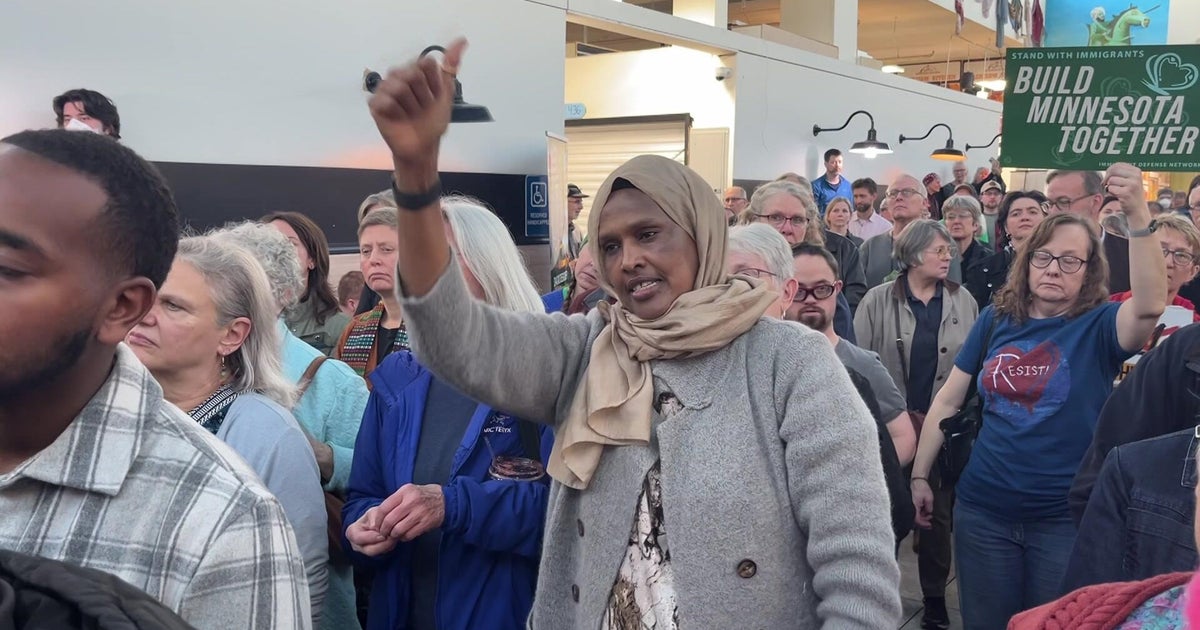
She looked around her kitchen: the magnets from their first family trip to the Grand Canyon, the drawings her children made in third grade, the grocery list from last night still taped to the fridge. Everything looked the same, yet nothing felt familiar anymore. It was as though the world had tilted overnight.
In another city, Fahim—a rideshare driver—stopped his car on the side of the road just to catch his breath. He had received the news between pickups and had spent the next fifteen minutes staring at his steering wheel, unable to move, unable to think. He loved this country. Loved the customers who shared stories with him. Loved the roads he knew better than anyone.
He suddenly felt like a stranger in the very place he had fought so hard to belong.
As the fictional directive continued to spread across social media and headlines, protests began forming. Somali elders who rarely left their homes during winter wrapped themselves in coats and joined the crowds. Young people carried signs made from cardboard scraps. Mothers held their children close, knowing the fear in their hearts was something they could never hide.
There were tears—so many tears—but also a fierce determination, the kind that only emerges when people realize they must defend their existence.
By early afternoon, the streets around state capitols echoed with chants. Some shouted in English, others in Somali, but the message was the same:
We are human. We belong. We have built lives here.

Inside the fictional halls of Washington, the tension was palpable. Advisors argued behind closed doors, aware that the fallout—both political and human—would be enormous. News outlets speculated endlessly, each offering conflicting interpretations of what might come next. Even supporters of the directive seemed rattled by the speed and severity of the decision.
Meanwhile, families across the country were forced into impossible conversations.
“Mom, what’s happening?” twelve-year-old Hana whispered as she watched her mother pack a small emergency bag—just in case.
“I don’t know yet,” her mother replied, voice cracking, “but we’ll face it together.”
These were words meant to comfort, but everyone understood the truth: unity alone couldn’t protect them from what was coming.
Nightfall brought no peace. Across cities, lights burned late in apartment windows. Community leaders met in basements, mosques, and living rooms, trying to organize responses, trying to reassure people even when they themselves felt drowning in uncertainty.
It wasn’t just fear of losing legal status. It was the terror of losing dignity. Losing the right to exist without looking over one’s shoulder. Losing the sense of home they had spent decades building from scratch.
But amid the chaos, something else began to rise: an unshakable solidarity.
Neighbors who barely knew each other stood together. Friends offered spare rooms. Teachers reached out to students with messages of support. Churches, mosques, and synagogues opened their doors. Entire neighborhoods became networks of protection.
And in the heart of Minneapolis, where tens of thousands of Somali Americans had built one of the strongest diaspora communities in the world, a massive midnight gathering formed—people shoulder to shoulder, candles in hand, faces illuminated with grief and resolve.
Speakers stepped forward, their voices trembling but steady.
“This is not the end,” one elder said. “We have survived war, famine, displacement—and we will survive this too. We are stronger than fear. We are stronger than any directive.”
Cheers rose through the cold night air. For the first time all day, hope flickered.
The fictional crisis was far from over. No one knew what dawn would bring. But one thing had become unmistakably clear:
A community that had already endured the unimaginable was not going to disappear quietly. They would fight—with their voices, their stories, their unity. They would show the world that home is not given by politics; it is built by people, family, memory, and love.
And as the candles burned in the darkness, one truth echoed through every heart gathered there:
They would not face the coming storm alone.